
"Det personliga är politiskt"
Innehåll
Sexualitet | Abort | Smärtfri förlossning Föräldraförsäkring och barntillsyn | Sexualbrottsutredningen | Läs mer |

Sexualitet
Kvinnors rätt till sin egen sexualitet var ett viktigt tema. 1964 hade p-pillret blivit tillåtet i Sverige. Detta innebar en revolution, den urgamla rädslan för ofrivilliga graviditeter försvann till stor del. De första p-pillren var betydligt starkare än dagens och gav fler biverkningar. Det var t.ex. vanligt att flickor som åt pillren gick upp betydligt i vikt. Kravet på ofarliga preventivmedel drevs av kvinnorörelsen. Man krävde också att forskningen skulle satsa på preventivmedel för män, något som ännu inte skett i någon högre grad.
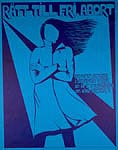
Abortfrågan
Smärtfri förlossning
I maj 1971 genomförde Grupp 8 mötet "Föda barn - ångest eller glädje?" på Stadsmuseet i Stockholm. Aktivisterna mobiliserades och spred 6.000 flygblad på stans mödravårds- och barnavårdscentraler. Bakgrunden var att det inte fanns någon hjälp för de mödrar som ängslades över sitt havandeskap och över förlossningssmärtorna. Deltagarna hade förberett frågor till Socialstyrelsens representanter, läkare och andra ansvariga som var inbjudna till mötet. I salen satt hundratals kvinnor och flera av dem berättade om medicinska övergrepp vid förlossningar. Dagen efter innehöll "Dagens Nyheter" en helsida med bland annat information om olika smärtlindringsmetoder under rubriken "Får kvinnan föda smärtfritt?". Flera aktörer, bl.a. de socialdemokratiska kvinnorna, hade tidigare lagt fram motioner om smärtfri förlossning till riksdagen, men Grupp 8:s uppmärksammade möte kom att skynda på en förändrad inställning till smärtfri förlossning.
Föräldraförsäkring och barntillsyn
Bristen på offentlig barnomsorg var stor under 1960- och 1970-talen. Kvinnorörelsen krävde utbyggnad av daghemmen, både för att kunna arbeta och för barnens skull. "Bra och gratis daghem och fritidshem åt alla barn" blev en av de viktigaste frågorna för Grupp 8 och andra kvinnogrupper runt om i landet under hela 1970-talet. "Bra daghem åt alla barn" och "Alla barn är allas barn" var två av slagorden. Kvinnoaktivister skrev remissvar till barnstugeutredningar och genomförde olika aktioner för att göra kommunpolitikerna uppmärksammade på frågan. Grupp 8 samarbetade med och genomförde gemensamma demonstrationer också med några av de aktionsgrupper för daghem som bildats.
Ett annat krav var att männen skulle ta del i sina barns vård och uppfostran på ett annat sätt än tidigare. Detta skulle vara positivt både för mansrollen och för barnens kontakt med sina fäder. 1974 infördes föräldraförsäkringen, som gav båda föräldrarna rätt att dela på ledigheten vid sitt barns födelse. Pappamånaden dröjde till 1995.
Sexualbrottsutredningen
Lagstiftningen om våldtäkt och sexualbrott mot kvinnor var också ett område som engagerade kvinnorörelsen. Först 1965 förbjöds våldtäkt inom äktenskapet i Sverige.
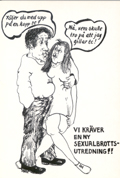
I den nya lag som till slut stiftades 1984 klargjordes det att offrets uppträdande före gärningen eller hennes relation till gärningsmannen inte påverkar hur brottet skall rubriceras. För särskilt allvarliga fall av våldtäkt infördes en ny brottsbeteckning, grov våldtäkt, med en särskild straffskala. Lagen har sedan ändrats igen, senast 2005.
Läs mer
Abortlagen, SFS 1974:595.
Boëthius, Maria-Pia, Skylla sig själv : en bok om våldtäkt. - Stockholm, 1976.
Brownmiller, Susan, Against our will : men, women and rape. - På svenska med titeln Våldtäkt, 1977.
Edlund, Therese, Det är inte ditt fel... men! en sociologisk analys av
kvinnans brist på jämställdhet i det svenska rättssystemet gällande våldtäkt. - C-uppsats. - Högskolan i Halmstad, vt 2008.
Klinth, Roger, Göra pappa med barn : den svenska pappapolitiken 1960-95. - Umeå, 2002. - Diss. - Abstract.
Scheffer Lindgren, Maria. "Från himlen rakt ner i helvetet": från uppbrott till rättsprocess vid mäns våld mot kvinnor i nära relationer. Diss. (sammanfattning) Karlstad, 2009.
Sexualbrottsutredningen. Sexuella övergrepp : förslag till ny lydelse av brottsbalkens bestämmelser om sedlighetsbrott : betänkande. - SOU ; 1976:9. - Stockholm, 1976.
Smärtfri förlossning eller psykisk förberedelse? - Ingår i: Rödhättan, 1978, 17, s. 22-32.
Thompson, Ulrika, "Rätten till våra kroppar" : kvinnorörelsen och våldtäktsdebatten. - Ingår i: Kvinnovetenskaplig tidskrift, 2000:4, s. 51-63.